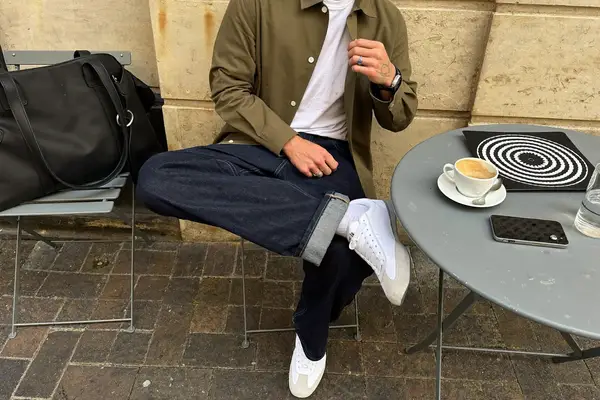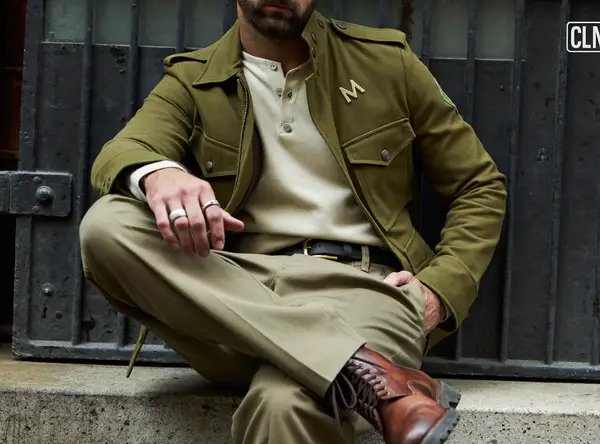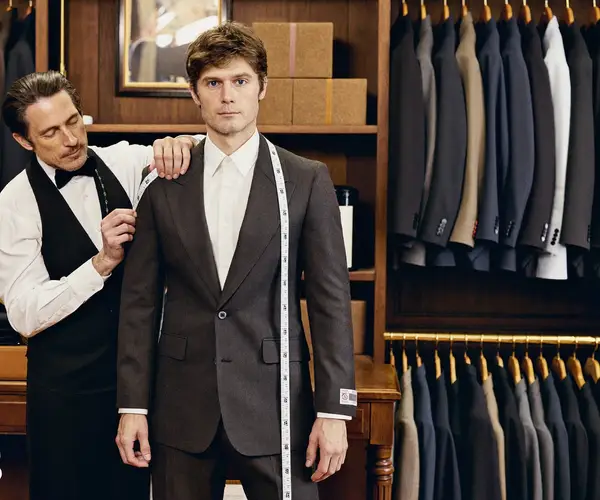
Classic menswear is the style built on a century of tailoring tradition: the suit, the dress shirt, the tie, the overcoat and polished leather shoes. It's the look of old Hollywood, Savile Row and Italian tailoring, and it remains the reference point for every other style. Even if you wear jeans most days, understanding the classics helps you dress better in any style.
What defines the classic style
- Tailoring at the centre: suits, sport coats and blazers cut to your body.
- Natural fabrics: wool, cotton, linen, silk and cashmere.
- A restrained palette: navy, grey, brown, white and light blue, with colour in ties and pocket squares.
- Quality over trend: pieces that looked good 50 years ago and will in 50 years' time.
- Attention to detail: the right tie knot, the right sock length, polished shoes.
The classic wardrobe: core pieces
| Category | Core pieces |
|---|---|
| Suits | Navy suit, charcoal suit; later a mid-grey, a brown or a subtle pinstripe |
| Separates | Navy blazer, tweed or textured sport coat, grey flannel trousers, tan cotton trousers |
| Shirts | White and light blue dress shirts, a blue or white oxford button-down, a subtle stripe or check |
| Ties | Navy, burgundy, green and brown silk ties; a grenadine; a knitted tie |
| Knitwear | Merino V-neck and crew-neck, cashmere roll-neck, cardigan |
| Outerwear | Navy or camel overcoat, trench coat |
| Shoes | Black cap-toe oxfords, brown brogues, dark brown loafers, suede chukkas |
Understanding the suit
A classic suit is defined by a few choices:
- Single-breasted vs double-breasted. Single-breasted with two buttons is the most versatile. Double-breasted is more formal and a stronger statement, and looks best on taller or slimmer builds.
- Lapels. Notch lapels are standard for business. Peak lapels are more formal and dramatic. Lapel width should be moderate (around 7–9 cm / 2.75–3.5 in).
- Vents. Double vents (two slits at the back) flatter most men and let the jacket move. A single centre vent is more American and traditional.
- Construction. Canvassed jackets (full or half) mould to your chest over time and last longer than cheaper fused jackets.
- Buttoning. "Sometimes, always, never": on a three-button jacket, the top is sometimes buttoned, the middle always, the bottom never. On a two-button, fasten the top only. Unbutton when sitting down.
Pattern and colour matching
The classic look often combines several patterns (a striped shirt, a patterned tie, a check jacket). The trick is varying the scale:
- If two items have patterns, make one large and one small, e.g. a wide-stripe shirt with a small-dot tie.
- If three items have patterns, use small, medium and large, and keep at least one solid element (usually the suit).
- Repeat one colour between pieces to connect them, e.g. a navy stripe in the shirt picked up by a navy tie.
Navy suit, white shirt, burgundy tie, white linen pocket square, dark brown shoes. It's appropriate almost everywhere, flatters everyone and is very hard to get wrong.
Wearing classic style today
Few men wear full suits every day anymore, but classic menswear hasn't disappeared. It has loosened up. Modern ways to wear it include:
- A navy suit with a fine merino roll-neck instead of shirt and tie.
- Suit trousers with a cashmere sweater and loafers (splitting the suit).
- A sport coat with dark jeans, an oxford shirt and brogues.
- A double-breasted blazer with a polo shirt in summer.
These softer interpretations lead naturally into our smart casual guide and sport-classic style guide.
Shoes and socks for classic outfits
Classic tailoring calls for leather-soled or thin rubber-soled dress shoes: oxfords for the most formal occasions, derbies and brogues for business and weekend, loafers for a softer look. Socks should be fine, long enough to cover the shin when seated, and in a colour that continues the line of the trousers. See men's shoe types explained and our sock rules.
Caring for classic clothes
- Hang suits on shaped wooden hangers and give them a day's rest between wears.
- Brush wool after wearing, and steam instead of ironing where possible.
- Dry-clean suits only when truly necessary (a few times a year), because chemicals wear out the fabric.
- Use cedar shoe trees and polish shoes regularly.
Frequently Asked Questions
What is classic men's style?
Classic menswear is built around tailoring (suits, blazers, dress shirts, ties, overcoats and leather dress shoes) in natural fabrics and timeless colours.
Which button should I fasten on a suit jacket?
On a two-button jacket, fasten the top button only. On a three-button, the middle always, the top sometimes, the bottom never. Unbutton when you sit.
What is the most versatile suit colour?
Navy, followed closely by charcoal grey. Both work for business, weddings, interviews and evening events.

We write practical, tested menswear advice for real life and real budgets. Learn more about us or send us a question.