Walk into a good shoe shop and you'll hear a whole vocabulary: oxfords, bluchers, wingtips, full brogues, penny loafers, double monks. It sounds complicated, but there are only a handful of basic shoe styles. Everything else is a variation. Once you can recognise them, choosing the right shoe for any outfit becomes easy.
Oxfords
The most formal lace-up shoe. The defining feature is closed lacing: the pieces of leather with the eyelets (the quarters) are stitched under the front of the shoe (the vamp), so the lacing sits flat and closed.
- Plain-toe oxford: the most formal; in black patent, it's the black-tie shoe.
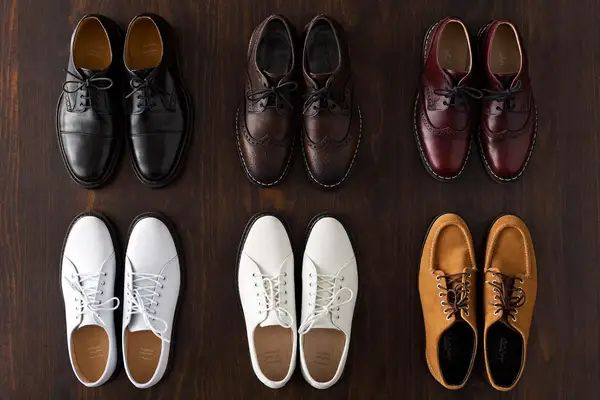
- Cap-toe oxford: a line of stitching across the toe; the classic business shoe.
- Wear with: suits, tuxedos, formal occasions. Black for the most formal, dark brown for business.
Derbies (bluchers)
A derby has open lacing: the quarters are stitched on top of the vamp, so the laces can open wider. This makes derbies slightly less formal and more comfortable for wide feet or high insteps.
- Wear with: suits (in black or dark brown smooth leather), blazers, chinos, flannel trousers and even jeans. In suede or grained leather, they are ideal for smart casual.
Brogues (wingtips)
"Brogue" refers to the decorative perforations, not the shoe's construction, so you can have brogue oxfords and brogue derbies. Broguing originally helped water drain from shoes in Irish and Scottish bogs, which is why it's considered more country and less formal.
| Type | Detail | Formality |
|---|---|---|
| Quarter brogue | Perforations only along the toe cap | Fairly formal |
| Semi-brogue | Toe cap perforations plus a medallion on the toe | Business / smart |
| Full brogue (wingtip) | A W-shaped wing cap with perforations along the sides | Smart casual / country |
| Longwing | The wing runs all the way to the heel | Casual / American classic |
Loafers
Slip-on shoes with no laces. Loafers have become one of the most versatile shoes in menswear, worn with everything from suits to shorts.
- Penny loafer: a leather strap with a slot across the top. The classic.
- Tassel loafer: small leather tassels. A bit more flamboyant, and a traditional Ivy League favourite.
- Horsebit loafer: metal hardware across the vamp. Italian and dressier.
- Driving moc: soft, flexible, with rubber nubs on the sole. Very casual and for summer.
- Wear with: chinos, tailored trousers, summer suits, jeans. Wear with no-show socks in summer.
Monk straps
Instead of laces, a monk shoe fastens with one (single monk) or two (double monk) buckled straps. They sit between the oxford and the loafer in formality and add a bit of personality to business outfits. They look great with suits and tailored trousers.
Boots
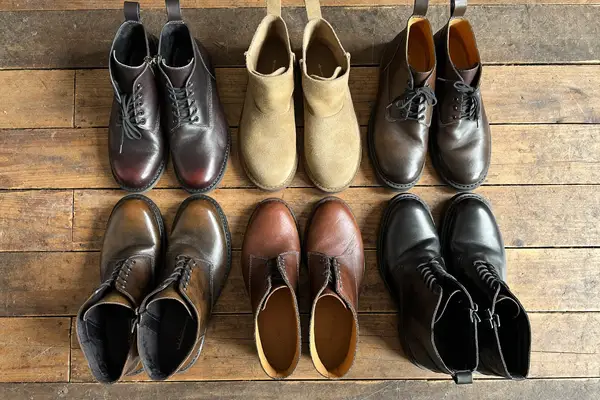
Boots cover a wide range, from sleek chelsea boots that work with a suit to rugged work boots. The main types are chelsea, chukka and desert boots, brogue boots, service boots, moc-toe work boots and combat boots. Each has its own place, so we've given them their own men's boots guide.
Sneakers
- Minimal leather sneakers: white, black or tan, clean lines, small or no logos. The most versatile sneaker, and fine for smart casual.
- Canvas sneakers: low- or high-top, relaxed and summery.
- Retro runners / suede trainers: casual weekends and streetwear.
- Performance running shoes: keep them for sport.
Summer and casual shoes
- Boat shoes: leather moccasin-style with a siped rubber sole, for summer, sailing and resort wear.
- Espadrilles: canvas with a jute rope sole, the Mediterranean summer shoe.
- Leather sandals: for holidays and very casual summer events.
The formality scale
From most to least formal: patent plain-toe oxford → cap-toe oxford → derby → monk strap → brogues → loafers → chelsea boots → chukkas → leather sneakers → boat shoes and espadrilles → work boots and canvas sneakers. Use this to match your shoes to the rest of your outfit. See the pairing chart in our shoe guide.
What makes a quality shoe?
- Construction: Goodyear-welted or Blake-stitched shoes can be resoled many times. Cemented (glued) shoes usually can't.
- Leather: full-grain calf leather ages and polishes beautifully; "genuine leather" or corrected grain is lower quality.
- Lining: leather lining breathes better and lasts longer.
- Care: cedar shoe trees, rotation (never two days in a row), and regular cleaning and polishing.
Black is more formal and best for evening, funerals and very conservative business. Brown, from tan to dark chocolate, is more versatile and works with navy, grey, green and brown clothing. If you own one pair of dress shoes, make it dark brown. If you own two, add black cap-toe oxfords.
Frequently Asked Questions
What is the difference between oxford and derby shoes?
Oxfords have closed lacing (the eyelet tabs are stitched under the vamp), making them sleeker and more formal. Derbies have open lacing stitched on top of the vamp, making them slightly more casual and roomier.
Are brogues formal?
Less formal than plain oxfords. Quarter and semi-brogues are fine for business; full brogues (wingtips) are best for smart casual and country outfits.
Can you wear loafers with a suit?
Yes, especially lighter or summer suits and business-casual outfits. For very formal events, oxfords are more appropriate.

We write practical, tested menswear advice for real life and real budgets. Learn more about us or send us a question.