A huge part of what men wear every day started life in the armed forces. Chinos, t-shirts, trench coats, peacoats, bomber jackets, cargo pants and desert boots were all designed for soldiers and sailors before they reached the high street. Every few years military style returns to the spotlight, and right now it's back in a big way, with olive field jackets, cargo trousers and combat boots everywhere from Milan runways to high-street stores.
Why military clothing works so well
- Function first. Every pocket, flap and fabric had a purpose, which is why the designs have lasted.
- Toughness. Made to survive war, these garments survive decades of everyday life.
- Masculine simplicity. Earthy colours and clean lines flatter most men.
- Versatility. Military pieces pair naturally with denim, knitwear and even tailoring.
The military classics
| Piece | Origin | How to wear it today |
|---|---|---|
| M-65 field jacket | US Army, 1965 | Over a hoodie, sweater or even a blazer; with jeans or chinos |
| MA-1 bomber | US Air Force, 1950s | With a white tee, dark jeans, sneakers or boots |
| Peacoat | Navy sailors, 18th–19th century | Over knitwear and jeans or chinos in winter |
| Trench coat | British officers, WWI | Over a suit or casual outfits in spring and autumn |
| Chinos / khakis | British and US army uniforms | A wardrobe staple with almost anything |
| Cargo trousers | British Army, 1930s–40s | Slim or straight cuts with plain tops and boots |
| Desert boots / chukkas | British officers in North Africa, WWII | With chinos and jeans, smart casual |
| Combat / service boots | Various armies | With jeans, cargos and field jackets |
| Fatigue / utility shirt | US Army | As an overshirt over a white tee |
The golden rule: one piece at a time
The fastest way to look like you're off to a re-enactment is to wear military pieces head to toe: field jacket, cargo pants, combat boots and a camouflage cap. Instead, make one or two military pieces the star and keep the rest simple and civilian.
Looks great
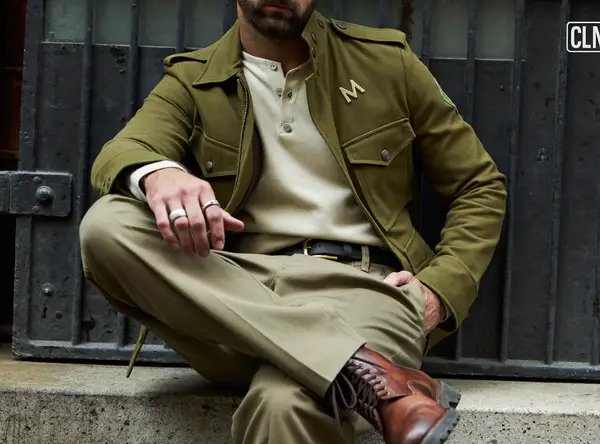
- Olive field jacket + grey sweater + dark jeans + brown boots
- Navy peacoat + roll-neck + grey trousers + chelsea boots
- Bomber + white tee + black jeans + white sneakers
Looks like a costume
- Camouflage everything
- Real insignia, rank badges or medals
- Field jacket + cargo pants + combat boots + dog tags
Colours of military style
The palette is naturally earthy: olive, khaki, tan, navy, stone and brown. These colours go with each other and with denim, grey and cream. Camouflage is best kept to small doses, if at all. A camo item looks more fashionable when everything else is plain.
Military style meets tailoring
One of the most stylish modern combinations is mixing military outerwear with tailoring: an olive field jacket over a navy suit, or a trench coat over a knitted polo and grey trousers. The rugged jacket takes the stiffness out of the suit, and the suit makes the jacket look sharp.
Vintage surplus vs new
Genuine army surplus stores are a great source of authentic, cheap and extremely durable pieces, especially field jackets, wool trousers and navy peacoats. Check the fit carefully (military sizing is often boxy) and budget for a tailor. Many heritage brands also produce faithful reproductions with a more modern cut.
Avoid wearing current, official uniform items, medals or unit insignia you didn't earn. In many countries it's considered disrespectful, and in some it's illegal. Stick to design classics and civilian reproductions.
Shoes for military style
Military-inspired outfits pair best with leather service boots, combat boots, chukkas and desert boots, or clean white sneakers for a modern contrast. See our men's boots guide for the best styles. Military style also sits naturally beside its heritage cousins, British country clothing and American workwear.
Frequently Asked Questions
Is military style still in fashion?
Yes. Military-inspired clothing such as field jackets, bombers, peacoats and cargo trousers is one of the strongest menswear trends, and pieces like chinos and trench coats never left.
How do you wear a field jacket?
Wear it over a sweater, hoodie or shirt with dark jeans or chinos and leather boots. Keep the rest of the outfit simple and civilian.
Is it OK to wear camouflage?
In small doses, yes, but it is safer to choose solid military colours like olive and khaki. Avoid real insignia and medals.

We write practical, tested menswear advice for real life and real budgets. Learn more about us or send us a question.