If there's one lesson that separates well-dressed men from everyone else, it's this: fit matters more than brand, price or trend. A budget suit that fits you properly will beat a designer suit that hangs off your shoulders every time. Luckily, fit is easy to learn. Once you know what to look for, you'll spot it in the fitting room in seconds.
Suit jackets and blazers
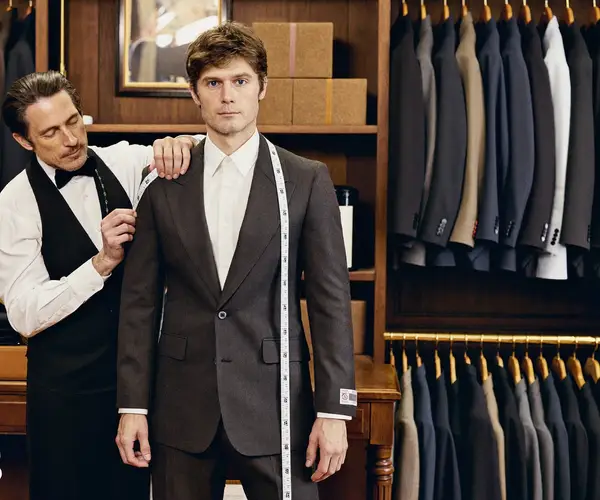
A jacket is the hardest garment to alter, so get these points right when you buy:
- Shoulders: the shoulder seam should end where your natural shoulder ends. If it hangs over, the jacket is too big. If there is a dent in the sleeve below the seam, it's too small. Shoulders are very difficult and expensive to alter, so treat them as non-negotiable.
- Chest: buttoned, the jacket should lie flat with no "X"-shaped pulling around the button. You should be able to slide a flat hand inside comfortably.
- Length: the jacket should cover your seat. A good rule is that the hem reaches roughly your knuckles when your arms hang naturally.
- Sleeves: show about 1–1.5 cm (half an inch) of shirt cuff. Sleeves are easy to shorten.
- Collar: the jacket collar should sit against your shirt collar with no gap at the back of the neck.
Dress shirts
- Collar: buttoned, you should fit one or two fingers between collar and neck, and no more.
- Shoulders: as with jackets, the seam sits on the shoulder bone.
- Body: no billowing fabric when tucked in, but no pulling across the buttons either. If you see gaps between buttons when you sit down, go a size up or choose a different cut.
- Sleeves: the cuff should reach the base of your thumb, where your wrist meets your hand, so it doesn't ride up when you reach forward.
- Length: dress shirts should be long enough to stay tucked when you raise your arms. Shirts meant to be worn untucked should end around mid-fly.
Trousers and chinos
- Waist: sits comfortably without a belt. The belt is an accessory, not a support.
- Seat: no sagging fabric and no horizontal pulling lines.
- Thigh and taper: enough room to sit and move. The leg should narrow gradually towards the ankle, which is called a taper.
- Break: "break" is how much the trouser hem rests on your shoe. Modern tailoring usually favours a slight break or no break, where the hem just kisses the top of the shoe. A full break with a lot of fabric pooling on the shoe looks dated.
| Break | Look | Best for |
|---|---|---|
| No break | Hem just touches the shoe, clean line | Slim modern suits, chinos, shorter men |
| Slight / quarter break | One soft fold | Almost everything; the safest choice |
| Medium / half break | One clear fold | Traditional business suits |
| Full break | Deep fold, fabric covers laces | Very classic or wide-leg trousers only |
Jeans
Jeans follow the same logic as trousers, but you have more freedom in length. Raw denim shrinks, so buy it according to the brand's size guide. Stacking a little at the ankle or a small cuff (turn-up) both look intentional. Avoid jeans so skinny that they pull across the thighs, or so loose that they bunch around the knee, unless that's a deliberate streetwear look.
T-shirts and polos
- The shoulder seam sits on your shoulder.
- Sleeves end mid-bicep and hug the arm lightly without squeezing.
- The hem ends around the middle of your fly: long enough to cover your belt, short enough not to look like a dress.
- The body skims your torso. It shouldn't cling and it shouldn't flap.
Coats and knitwear
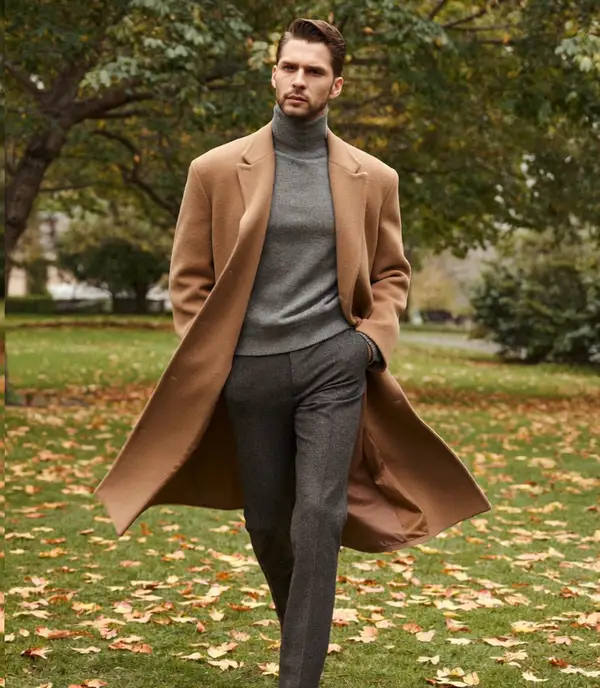
Outerwear needs to be sized with layers in mind. Try coats on over a blazer or thick sweater. The sleeves should cover your jacket and shirt cuffs completely. Knitwear should hug without clinging, with cuffs and hem ribbing sitting at the wrist and hip.
What a tailor can and can't fix
Easy & affordable
- Shortening trousers and sleeves
- Taking in the waist of trousers
- Tapering trouser legs
- Taking in the sides of a shirt or jacket
- Adding darts to a shirt
Difficult or impossible
- Changing shoulder width
- Lengthening a jacket
- Making a jacket significantly bigger
- Fixing a collar gap at the neck (possible, but pricey)
- Lengthening trousers without spare fabric
Buy for the part that's hardest to alter: shoulders for jackets and shirts, seat and thigh for trousers. Everything else can usually be fixed by a good tailor for a modest fee.
Finding your measurements
It's worth knowing your key measurements, especially if you shop online: neck, chest, waist, seat, inseam and sleeve length. Any tailor can take them in five minutes. Keep a note on your phone along with the sizes that fit you best at the brands you like, since sizing varies a lot between labels.
Now that you know how things should fit, put the finishing touches on with our men's accessories guide.
Frequently Asked Questions
How much should a shirt cuff show under a jacket?
Around 1 to 1.5 cm, or about half an inch. It creates a clean line and shows the jacket sleeve is the right length.
Where should suit trousers end?
For a modern look the hem should just touch the top of the shoe with a slight break or no break. Avoid a lot of fabric pooling over the shoe.
Can a tailor make a suit jacket smaller in the shoulders?
Only slightly and at considerable cost. Shoulders are the hardest part of a jacket to alter, so always buy jackets that fit in the shoulders.

We write practical, tested menswear advice for real life and real budgets. Learn more about us or send us a question.